
In early 2025, the opioid crisis in the United States saw a sharp decline in overdose deaths. In fact, deaths decreased by 25% compared to the previous year. This drop is largely attributed to fewer people using opioids overall and the fact that fentanyl has already saturated most of the illegal drug market, leaving fewer opportunities for new, deadly exposures.
While this is great news, this doesn’t mean overdose deaths aren’t still happening across the country. Gray death, an unregulated street drug made from a blend of opioids, can be particularly deadly, causing fatalities within minutes. So, what exactly is gray death? And is gray death stronger than fentanyl?
Quick Summary: Gray death is a street drug that contains a mix of illegal drugs, typically heroin, fentanyl, carfentanil, and U-47700. Just one dose can kill within minutes, and reversing an overdose may require more naloxone than what’s typically needed for one opioid alone.
What Is the Gray Death Drug?
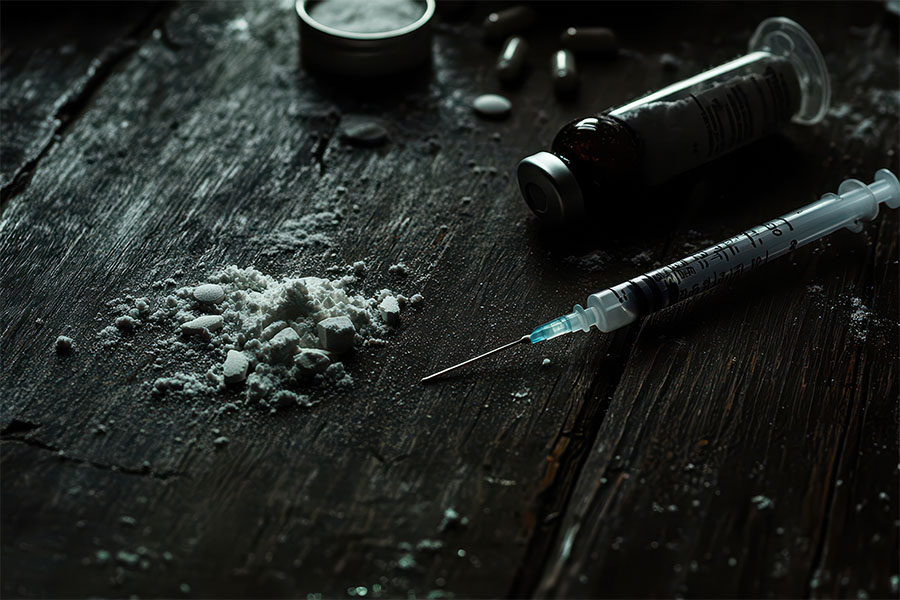
Gray death isn’t a single substance. It’s actually a street name, signifying a mix of whatever combination of synthetic opioids a manufacturer happens to have on hand. It may come pressed or mixed together, but it’s sold as one product.
The Georgia Bureau of Investigation first flagged it in May 2017 after crime labs analyzed samples that looked like concrete powder but tested positive for multiple opioids. And since 2017, gray death has surfaced across the southeastern United States, including Georgia, Alabama, Florida, Ohio, and Pennsylvania.
Simply put, gray death is engineered to be as potent as possible. However, with increased potency, the risk of overdosing or death also rises.
What Is Gray Death Made Of?
There isn’t one main recipe for gray death. With that said, analyses have consistently found four substances showing up across batches, including:
- Heroin: This is the base found in most samples. It provides the familiar opioid effect users expect, but it’s surprisingly the least dangerous ingredient in the mix.
- Fentanyl: This illegal substance is cheap to produce, widely available through illicit channels, and roughly 50 times more potent than morphine. It’s responsible for the majority of opioid overdose deaths in the United States.
- U-47700: This is a synthetic opioid originally developed by the Upjohn Company in the 1970s but never approved for human use. It produces heroin-like effects and was linked to at least 46 overdose deaths across multiple states by late 2017, prompting the DEA to classify it as a Schedule I substance.
- Carfentanil: Developed as a tranquilizer for elephants and other large animals, carfentanil is approximately 100 times stronger than fentanyl and 10,000 times stronger than morphine.
Some batches also include stimulants, such as cocaine or amphetamines. Mixing opioids with stimulants adds a lot of stress on both the cardiovascular and nervous systems. But ultimately, there’s often no way to know what each individual batch may contain.
Why Gray Death Is More Dangerous Than Fentanyl
Fentanyl is already one of the deadliest drugs in circulation. But gray death can be much worse. Here’s a table outlining the key differences between gray death vs fentanyl:
| Fentanyl | Gray Death | |
| Composition | A single synthetic opioid | A mix of 2+ opioids (and/or other drugs) |
| Dosage Consistency | Low | None (each batch can be different) |
| Potency | 50x stronger than heroin | About 4000x stronger than heroin |
| Naloxone Doses Needed | Usually 1-2 | May require up to 10 |
Gray death mixes containing carfentanil can be particularly risky. It’s up to 100x stronger than fentanyl, adding to gray death’s high potency and contributing to a higher risk of overdose.
How Gray Death Affects the Body
Opioids work by binding to receptors in the brain and spinal cord that regulate pain, breathing, and reward. At therapeutic doses, it dampens pain signals. At the doses gray death delivers, it can shut down the central nervous system.
Respiratory depression, the slowing and eventual stopping of breathing, is the mechanism behind most opioid deaths. Since gray death contains multiple opioids hitting the same receptors from different angles and at wildly different potencies, the body’s breathing reflex can decrease much faster than the user or bystanders expect.
The opioid combination also overwhelms the brain’s ability to regulate heart rate and blood pressure, which is why cardiac events (including heart failure) have been documented after a single use.
Signs of a Gray Death Overdose
Recognizing an overdose quickly can mean the difference between life and death. And it’s similar to opioid overdose symptoms, but often happens faster.
Signs of a gray death overdose may include:
- Slow or stopped breathing
- Blue lips or fingertips
- Unconsciousness
- Pinpoint pupils
- Gurgling or choking sounds
If you see any combination of these signs, call 911 immediately. Don’t wait to see if the person starts to get better. Administer naloxone immediately, if available. Then continue administering doses every two to three minutes until emergency medical help arrives. Perform rescue breathing if the person has stopped breathing on their own.
Why is Gray Death So Unpredictable?
While synthetic opioid dangers already involve not knowing what’s mixed or cut with it, similarly, gray death’s particular unpredictability comes down to the lack of a standard formula.
Street-level dealers often mix these substances without scales, without formulas, and without any quality control. One bag might contain mostly heroin with a dusting of fentanyl. The next bag, from the same supplier, might be loaded with carfentanil. And this means that a person who survived last Tuesday’s dose could potentially die from this Friday’s mix.
Treatment for Opioid Addiction
For anyone already caught in the cycle of opioid use, information alone doesn’t break the pattern. While knowledge is power, the best thing you can do for yourself or a loved one is to seek structured, professional treatment.
Rehab treatment for opioid addiction may include:
- Medical detox is usually the first step. Withdrawal from potent opioids can be physically dangerous, and medical supervision ensures the process is managed safely with appropriate medications to ease symptoms.
- Inpatient rehabilitation provides a controlled environment where the early, vulnerable weeks of recovery happen away from access and triggers. Programs vary in length, but it’s common for many people to enter 30 to 90-day programs for opioid addiction.
- Outpatient programs offer flexibility for people who need to maintain work or family responsibilities while receiving treatment. These range from intensive outpatient programs (several hours per day, multiple days per week) to standard weekly counseling.
- Medication-assisted treatment (MAT) uses FDA-approved medications alongside counseling and behavioral therapy. MAT has strong clinical evidence behind it and significantly reduces the risk of relapse and overdose death.
Addiction can be both isolating and chaotic. But with the right support, you can receive proper care, accountability, and enter a community on a similar trajectory. It all starts with one phone call.
When to Seek Help
Addiction isn’t always obvious. Signs that an addiction is underway may involve needing more of a substance to feel the same effect, switching to unknown or unfamiliar drugs because the usual ones stopped working, using alone, or having a previous overdose and continuing to use afterward.
If any of those sound familiar, the right time to get help is right now. With Genesis House, our caring and compassionate team is here to guide you every step of the way. You don’t need to do this alone. Whenever you’re ready, we’re here. Call us at 833-465-2777.